Guides & Advice
Full-Size vs Lightweight Strollers: How to Choose the Right One

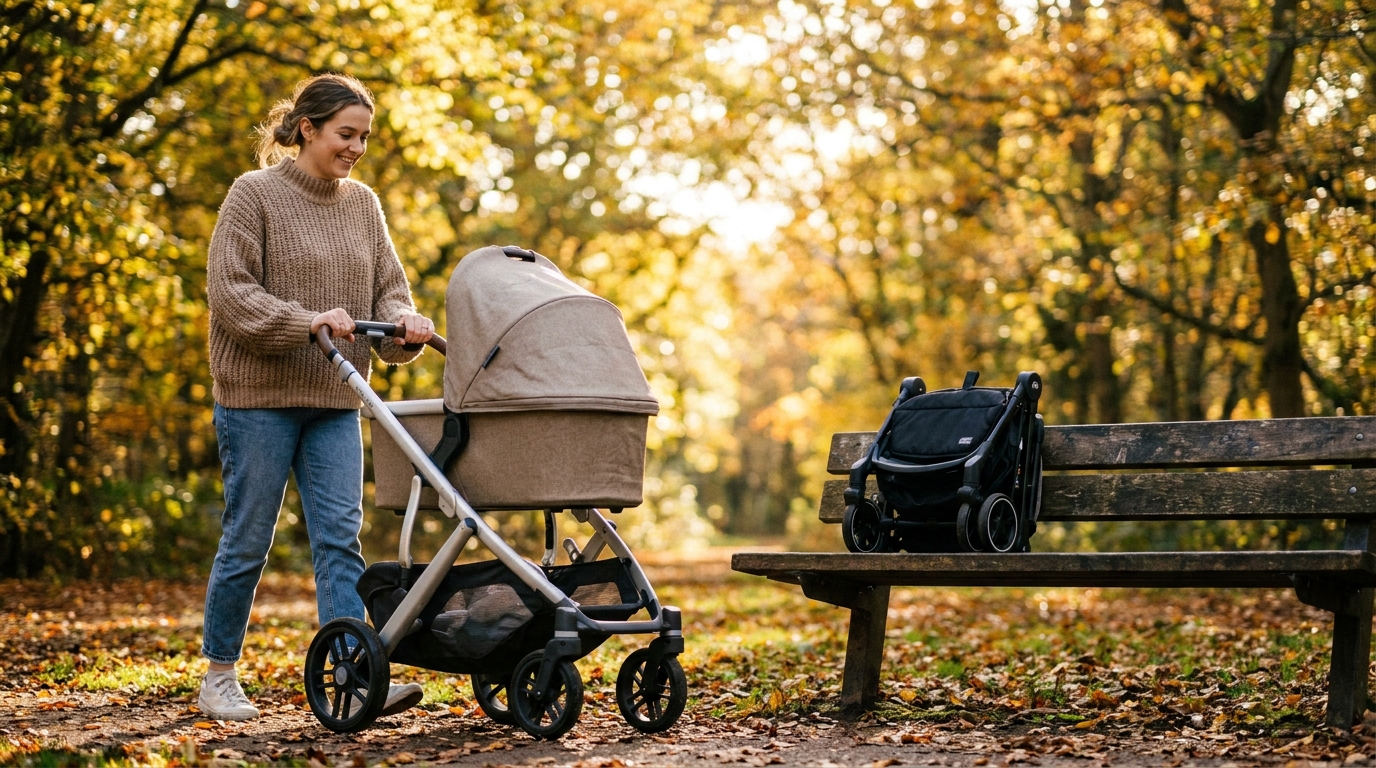
Few baby-gear decisions feel as overwhelming as choosing your first pushchair, and the debate over a full size vs lightweight stroller sits right at the heart of it. One promises plush comfort and all-terrain confidence; the other promises a featherweight fold you can swing into a car boot with one hand. The truth is that neither is universally “better” — the right choice depends entirely on your home, your transport, your terrain and how your family is likely to grow.
This guide walks you through the real-world differences so you can buy once and buy well. We’ll cover what actually separates the two categories, the features that matter most for UK life, a few standout models we love, and a simple comparison to help you decide.
Full size vs lightweight stroller: what’s the real difference?
The labels can be slippery, so let’s define them clearly. A full-size stroller (often sold as a pram or travel system) is built for newborn-to-toddler use, usually carrying a lie-flat carrycot or bassinet, a large reversible seat, generous suspension and big wheels. They tend to weigh 9–15kg and fold into a substantial package.
A lightweight stroller (what many of us call a buggy or compact pushchair) prioritises low weight and a small, often one-handed fold. Many tip the scales at 6–8kg and collapse small enough for overhead lockers or a packed hallway cupboard. The trade-off is usually firmer suspension, smaller wheels and, on the most compact models, a seat better suited to babies who can already sit up.
When a full-size stroller wins
- From birth comfort: a true lie-flat carrycot is recommended for newborns and protects a baby’s developing spine and breathing on longer outings.
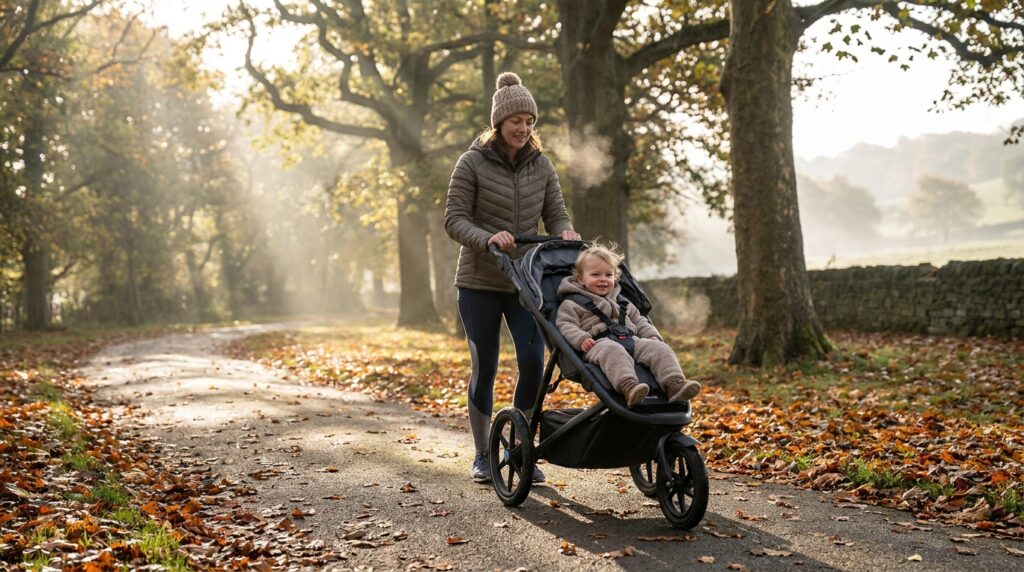
- Rough or mixed terrain: larger wheels and proper suspension glide over gravel, cobbles, grass and kerbs.
- Long days out: roomier seats, bigger hoods and larger shopping baskets make all-day use far more pleasant.
- Growing families: many convert to carry a second child, which we’ll come back to below.
When a lightweight stroller wins
- Public transport and city life: a quick fold matters enormously on buses, trains and the Tube.
- Small cars and small homes: a compact fold frees up boot space and hallway clutter.
- Travel and holidays: many cabin-friendly buggies are built to survive baggage handlers and tight aircraft aisles.
- A second, simpler buggy: plenty of families own a full-size pram and a lightweight one for nursery runs and trips.
The features that actually matter
Specs sheets can blur together, so focus on the handful of factors that genuinely shape day-to-day life.
Fold and weight
Be honest about how often you’ll be lifting it. If you regularly carry the pushchair up steps to a flat or in and out of a small car, every kilogram counts — and a true one-handed fold (ideally while holding a baby) is worth more than any other feature. The CYBEX Gazelle S Stroller is a clever middle ground here: a modular full-size frame that still folds compactly and converts to carry a newborn and toddler together.
Birth readiness
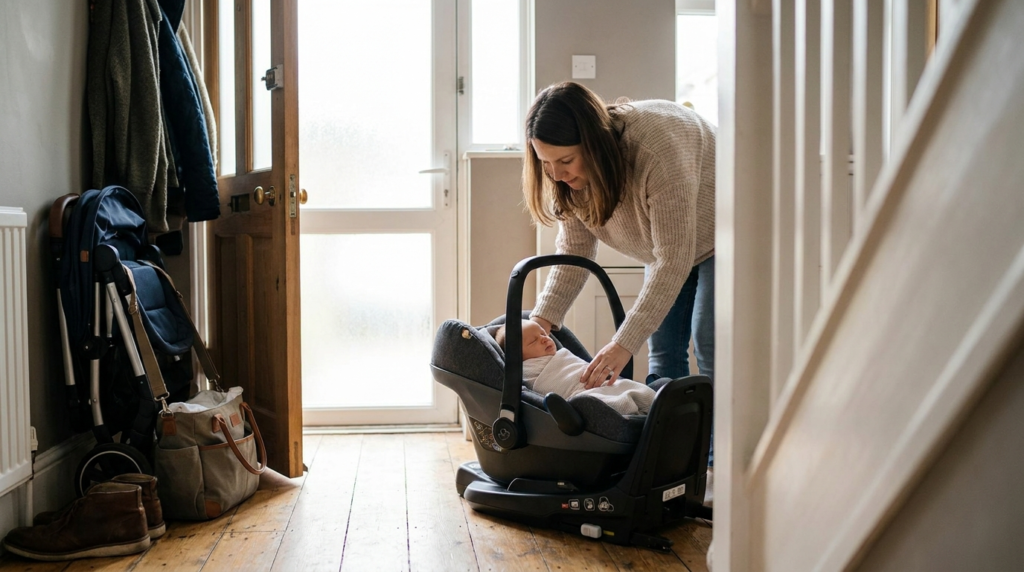
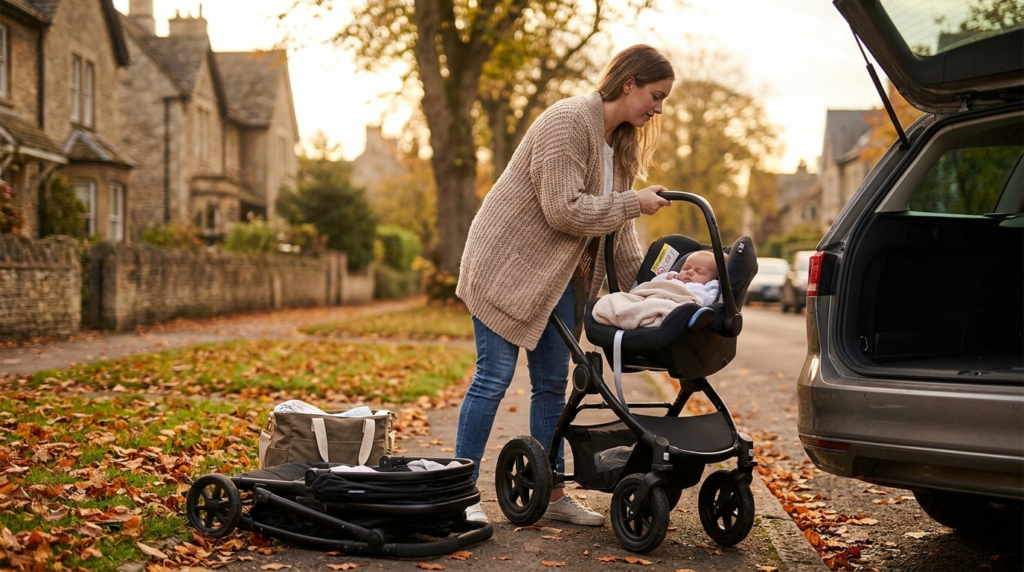
If you’re buying before your due date, check whether the seat lies fully flat or whether you’ll need a separate carrycot or an infant car seat to make a complete travel system. The Orbit Baby Stroll & Sleep Travel System is designed around this from-birth need, pairing a lie-flat bassinet with an infant seat in one coordinated package.
Terrain and suspension
Think about your everyday routes, not the showroom floor. Foam-filled or larger air-style wheels and real suspension transform pushing comfort on uneven British pavements. The iconic UPPAbaby Vista V3 Stroller is a favourite precisely because it rolls smoothly across mixed terrain while staying manoeuvrable in shops and cafés.
Growing with your family
If a second baby is on the horizon, a convertible single-to-double frame can save you buying twice. The Silver Cross Wave 3 Single-to-Double Stroller and the modular Bugaboo Donkey5 Mono Complete Stroller both start as roomy singles and expand to carry two — ideal if you’re planning ahead. For a ready-made tandem on a smaller budget, the Joie Baby Rosemary Double Stroller seats two from the outset. For more on this, our UK guide to double strollers for two under two is well worth a read.
Quick comparison at a glance
| Consideration | Full-size stroller | Lightweight stroller |
|---|---|---|
| Typical weight | 9–15kg | 6–8kg |
| From-birth lie-flat | Usually built in | Often needs a carrycot or car seat |
| Terrain comfort | Excellent (big wheels, suspension) | Best on smooth pavements |
| Fold size | Larger | Compact, often cabin-friendly |
| Basket & storage | Generous | Smaller |
| Best for | Daily all-rounder, mixed terrain, growing families | City life, travel, second buggy |
How to choose: a simple decision path
- Map your typical week. Mostly pavement and public transport? Lean lightweight. Lots of car boots, parks, gravel or country walks? A full-size frame will serve you better.
- Check your storage. Measure your car boot and your hallway before you fall in love with a model. A pram that won’t fit your boot is a daily frustration.
- Plan for from-birth use. Confirm whether you need a carrycot or a compatible infant car seat, and that the seat reclines flat for the early months.
- Think two to three years ahead. A convertible single-to-double frame can be the more economical choice if your family may grow.
- Test the fold yourself. If you can, fold and lift the pushchair in store — ideally one-handed. It’s the test that exposes the difference between specs and reality.
Our rule of thumb: choose your main pushchair around your hardest weekly journey, not your easiest. Most families end up happiest with a comfortable full-size all-rounder, and many later add a featherweight buggy for travel.
A note on car seats and safety
Whichever stroller you choose, if it doubles as a travel system the attached infant car seat must meet current UK requirements. Before you buy, read up on the rules in our explainer on UK car seat laws for 2026, i-Size, height and age so your car seat and stroller work together safely and legally.
And if you’re an active parent hoping to keep running after the baby arrives, note that everyday strollers — full-size or lightweight — are not designed for jogging. Our jogging strollers guide explains why a dedicated three-wheeler is the safe choice for running.
The bottom line
There’s no single winner in the full size vs lightweight stroller question — only the model that fits your life. If you want one pushchair to do almost everything, a comfortable, well-suspended full-size frame is hard to beat. If your days revolve around buses, trains, small boots and travel, a featherweight buggy will earn its keep every single day. Plenty of UK families happily own one of each.
Whatever you choose, take your time and buy from a retailer that stands behind the product. When you’re ready to compare models side by side, browse our full range of full-size strollers — every order ships with free UK delivery and free 30-day returns, so you can shop with complete confidence.
Frequently Asked Questions
Is a full-size or lightweight stroller better for a newborn?
A full-size stroller is usually the safer from-birth choice because most include a lie-flat carrycot, which supports a newborn's spine and breathing. A lightweight buggy can work from birth too, but often only with a carrycot attachment or an infant car seat that lies the baby flat.
How much does a lightweight stroller typically weigh compared to a full-size one?
Lightweight strollers usually weigh around 6u20138kg, while full-size strollers and travel systems often weigh 9u201315kg. If you frequently lift the pushchair into a car boot or up steps, that difference adds up quickly over the day.
Can I use one stroller from birth all the way to toddlerhood?
Yes. Many full-size strollers convert from a lie-flat carrycot to an upright toddler seat, so a single frame can last from birth to around three or four years. Convertible single-to-double models can also carry a second child later.
Are lightweight strollers suitable for public transport and travel?
They're ideal for it. Their compact, often one-handed fold makes buses, trains and the Tube far easier, and many are cabin-friendly for flights. This is the main reason families add a lightweight buggy alongside a full-size pram.
Do I need a separate jogging stroller if I want to run?
Yes. Everyday full-size and lightweight strollers are not designed for running and can be unsafe at speed. For jogging you need a dedicated three-wheeler with a fixed front wheel and a wrist strap u2014 see our jogging strollers guide for the full safety advice.