Guides & Advice
Bouncers vs Swings: Soothing Your Newborn the Smart Way

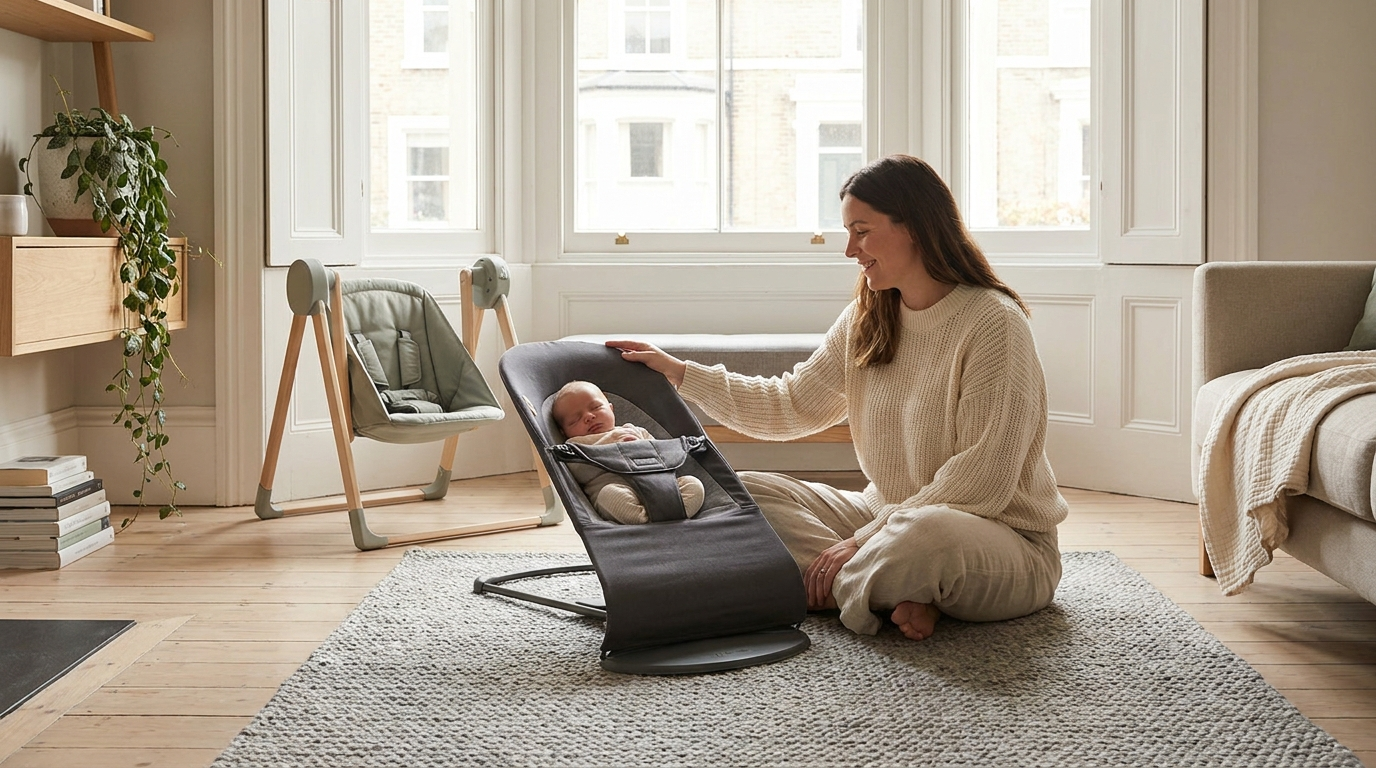
Few things test a new parent like a baby who simply will not settle. When your arms need a rest but your little one still craves that gentle, rhythmic motion, a dedicated seat can be a quiet hero of those early months. The big decision most families face is the baby bouncer vs swing question, and the honest answer is that they soothe in genuinely different ways. This guide breaks down how each one works, what to look for, and which models earn their place in a UK home.
Baby bouncer vs swing: what is the real difference?
It is easy to use the words interchangeably, but they are not the same product. Understanding how each creates motion is the key to choosing well.
How a bouncer works
A bouncer is, at heart, a lightweight reclined seat on a flexible frame. Your baby’s own little kicks and wriggles set off a soft, springy bounce, which means the motion is responsive and led by them. Many modern bouncers are entirely non-mechanical, with no motor, no batteries and no noise. They are light enough to carry from the nursery to the kitchen, fold flat for storage, and tend to suit newborns through to toddlers who can later use them as a comfy little chair.
How a swing works
A swing provides motion for your baby rather than relying on them to generate it. That usually means a powered base offering rocking or gliding movement, often with adjustable speeds, a timer, gentle melodies and sometimes nature sounds. For a baby who only settles with constant, predictable motion, that hands-free rhythm can be a genuine lifeline during the witching hour. The trade-off is a larger footprint, a higher price and, in many cases, a reliance on mains power or batteries.
How to choose between a bouncer and a swing
There is no single right answer, only the right answer for your baby and your home. Run through these considerations before you buy.
- Your baby’s temperament: some babies are soothed by their own movement and love a bouncer; others need sustained, hands-free motion and respond better to a swing.
- Space and storage: bouncers fold slim and tuck behind a sofa. Swings are bulkier and tend to live in one spot, so measure your floor space honestly.
- Budget: bouncers generally start lower; powered swings and premium 2-in-1 models sit higher up the price scale.
- Portability: if you want to move the seat room to room throughout the day, a lightweight bouncer wins comfortably.
- Longevity: look for a seat that converts or reclines for use beyond the newborn stage so it earns its keep.
- Noise: a silent bouncer suits a sleeping household; a swing’s melodies and motor hum may or may not be welcome.
A simple rule of thumb: if you want something light, quiet and portable, lean towards a bouncer. If you want hands-free, sustained motion for a baby who fights settling, a swing may be worth the extra outlay and space.
Safety first: the non-negotiables
Whichever you choose, safe use matters more than any feature list. Always use the harness on every recline, keep the seat on a flat, stable floor (never on a raised surface), and stay close while your baby is in it. Crucially, these seats are designed for supervised, awake play and soothing, not for sleep. If your baby drifts off, the long-standing safer-sleep guidance is to move them to a firm, flat surface such as their cot or Moses basket. For authoritative, up-to-date advice on safer sleep and product safety, always defer to recognised UK sources such as the NHS and The Lullaby Trust rather than to marketing claims. Also check the maximum weight and age limits printed on your specific model.
Top picks at Millington Baby
We are an authorised retailer of the brands below, so every model is the genuine article with full warranty. Here are standout choices across both camps.
Best bouncers
If you want the classic, fuss-free, motor-free experience, the BabyBjörn Bouncer Balance Soft (£230) is the benchmark. It uses your baby’s own movement for a natural bounce, weighs very little and folds flat, making it ideal for smaller UK homes and flats.
For design-led families, the CYBEX LEMO 2 Bouncer (£300) brings a sleek, contemporary look that suits a modern living room, while the Bugaboo Giraffe Baby Rocker (£250) is a soothing rocker that pairs neatly with the wider Giraffe system if you want a coordinated nursery setup.
Best swings and hybrids
If sustained motion is your priority, the Maxi Cosi Cassia Swing (£200) offers gentle powered rocking to help settle a fractious newborn hands-free. For something that bridges both worlds, the Stokke Yoga Baby Bouncer & Swing (£299) is a clever convertible that works as both, giving you flexibility as your baby’s preferences change.
On a tighter budget, the Joie Baby Cinnamon 2-in-1 Glider & Rocker (£190) delivers excellent value with two soothing modes in one seat, making it a sensible all-rounder for first-time parents.
Quick comparison
| Feature | Bouncer | Swing |
|---|---|---|
| Source of motion | Baby’s own movement | Powered or assisted motion |
| Power needed | Usually none | Mains or batteries (often) |
| Footprint | Compact, folds flat | Larger, fixed spot |
| Portability | Excellent | Limited |
| Typical price | From around £190 | Around £200 and up |
| Best for | Quiet, portable soothing | Hands-free, sustained motion |
Smart tips for getting the most from either seat
- Introduce it gradually. Start with short, calm sessions so your baby learns to associate the seat with feeling settled.
- Time it well. A few minutes after a feed and a nappy change is often the sweet spot for contentment.
- Keep it close, not constant. These seats are brilliant for short stretches, but plenty of floor time and cuddles still matter.
- Add gentle stimulation. A toy bar or a soft view of the room can hold a curious newborn’s attention.
- Always harness up. Even for two minutes, fasten the straps every single time.
Further reading
Building your kit list? Our Ultimate Baby Registry Checklist for UK Parents helps you prioritise the essentials, while our changing bag checklist for new parents covers everything you need on the go. If you are thinking ahead to life with a mobile baby, the guide to stroller wagons for growing families is well worth a look.
The verdict
In the baby bouncer vs swing debate there is no universal winner, only the best fit for your baby’s temperament, your space and your budget. A bouncer rewards you with simplicity, silence and portability; a swing earns its place with hands-free, sustained soothing for babies who need it. Many families end up loving a hybrid that does both. Whatever you decide, explore the full range of bouncers and swings at Millington Baby, with free UK delivery and free 30-day returns on every order so you can find the perfect fit with complete peace of mind.
Frequently Asked Questions
Is a baby bouncer or swing better for a newborn?
Neither is universally better; it depends on your baby. Bouncers suit babies soothed by their own gentle movement and are light and quiet, while swings provide hands-free, sustained motion that helps babies who struggle to settle.
Can a baby sleep in a bouncer or swing?
No. These seats are designed for supervised, awake soothing and play, not sleep. If your baby drifts off, move them to a firm, flat surface such as a cot or Moses basket, following NHS and Lullaby Trust safer-sleep guidance.
How long can a baby stay in a bouncer or swing?
Keep sessions short, typically up to around 20 to 30 minutes at a time, and always supervise. Plenty of floor time, tummy time and cuddles remain important for development.
Do baby swings need batteries or mains power?
Many powered swings run on mains electricity or batteries to provide their motion, melodies and timers. Bouncers are usually non-mechanical and rely on your baby's own movement, so they need no power at all.
What age can a baby use a bouncer or swing from?
Most are suitable from birth when used in the fully reclined newborn position, but always check the minimum age and maximum weight limits printed on your specific model and use the harness every time.