Guides & Advice
UK Car Seat Laws 2026: i-Size, Height & Age Rules Explained

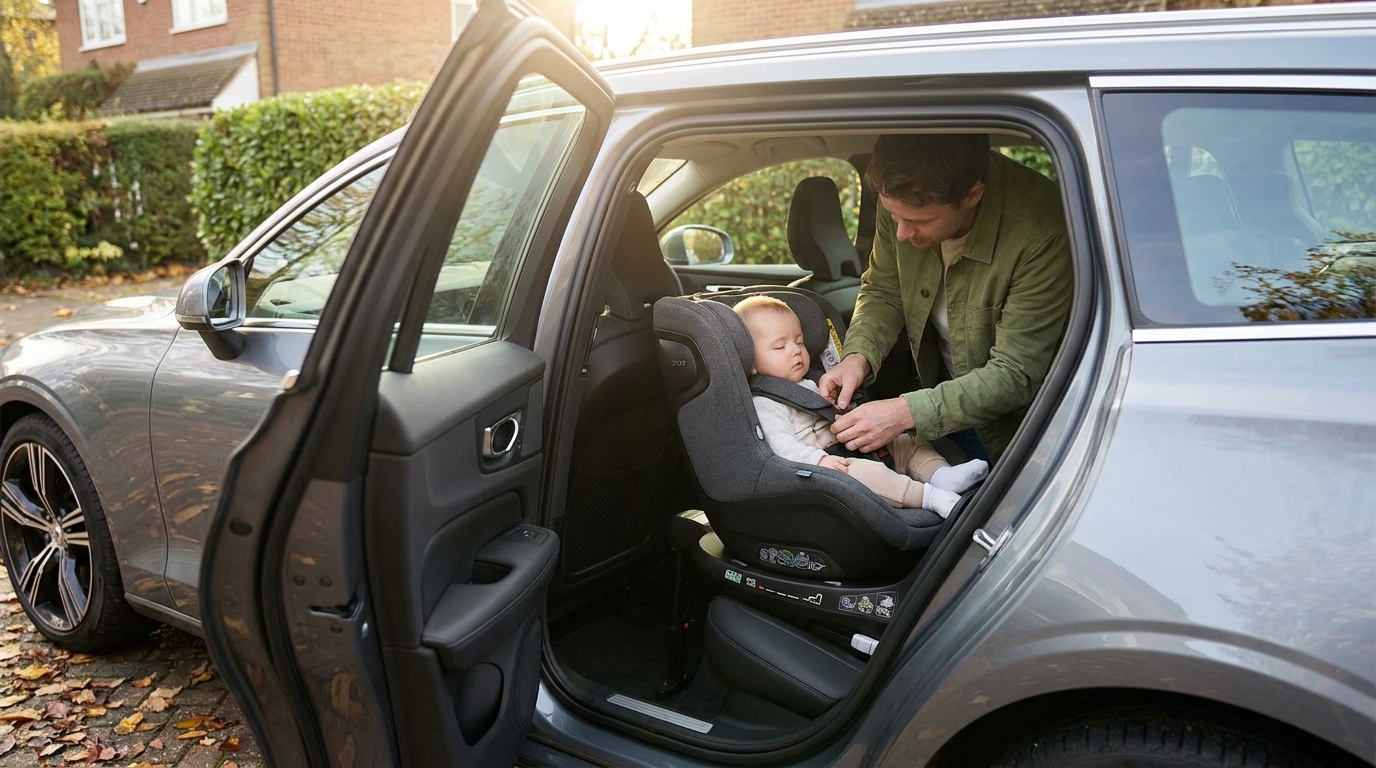
Few things matter more than getting your child’s car seat right — but the rules can feel genuinely confusing, especially with two safety standards running side by side. The good news is that the UK car seat laws are clearer than they first appear once you understand how height, age and the i-Size standard fit together. This guide breaks it all down in plain English so you can choose a compliant seat with confidence in 2026.
UK car seat laws in 2026: the essentials
By law, children in the UK must use a child car seat until they are either 135cm tall or 12 years old — whichever comes first. After that point a child can use an adult seat belt, though many parents keep their child on a high-backed booster a little longer for comfort and belt positioning. The seat must be suitable for your child’s height or weight and correctly fitted in your vehicle.
There are two approval standards you’ll see on the market: the older weight-based R44 standard and the newer height-based i-Size (R129) standard. Both are currently legal to buy and use, but they categorise seats differently. Always check the orange approval label on any seat before you buy, and for the definitive position read the official GOV.UK child car seat rules.
Only EU-approved child car seats can be used in the UK. These have a label showing a capital “E” in a circle and the standard the seat meets (R129 for i-Size, or R44 for weight-based seats).
What is i-Size (R129)?
i-Size is the more modern regulation, and it was designed to make choosing a seat simpler and safer. Instead of selecting by weight, you choose by your child’s height. i-Size seats are mandatory ISOFIX-fitted, are side-impact tested, and require children to travel rear-facing until at least 15 months old — considerably longer than the old minimum. Rear-facing travel protects a baby’s relatively heavy head and fragile neck far better in a frontal crash, which is why safety bodies strongly encourage it.
Weight-based (R44) seats
R44 seats group children by weight (for example Group 0+, Group 1, Group 2/3). They remain legal and many excellent seats still use this standard, but newer i-Size models are gradually replacing them. If you’re buying today, an i-Size seat is generally the more future-proof choice.
Height and age rules by stage
Rather than memorising every group, it helps to think about the four broad stages your child moves through. The table below summarises the typical progression — always defer to your specific seat’s labelling and to RoSPA car seat safety advice for safety best practice.
| Stage | Rough age | i-Size height / R44 weight | Seat type |
|---|---|---|---|
| Newborn | Birth – approx 12-18 months | 40-87cm / 0-13kg | Rear-facing infant carrier |
| Toddler | Approx 15 months – 4 years | 76-105cm / 9-18kg | Convertible / toddler seat |
| Young child | Approx 4 – 7 years | 100-125cm / 15-25kg | High-backed booster |
| Older child | Approx 7 – 12 years | 125-150cm / 22-36kg | High-backed booster (then booster cushion) |
A note on backless booster cushions
The law changed some years ago so that backless booster cushions are only approved for children taller than 125cm and heavier than 22kg. A high-backed booster offers far better side-impact protection and routes the seat belt more safely, so most experts recommend staying with a high-backed model for as long as your child fits it.
Choosing the right seat for each stage
Stage 1: rear-facing infant carriers
For newborns, a rear-facing infant carrier is the only sensible starting point. Look for a deep, well-padded shell, newborn inserts and a base that clicks securely into ISOFIX so you can lift the carrier in and out without re-threading the belt each time. The Britax Cypress Infant Car Seat with Alpine Base is a lightweight, i-Size-approved option built around exactly this kind of easy, secure base system. For a premium alternative with integrated side-impact protection, the Bugaboo Turtle Air Shield By Nuna Car Seat + Base Black is engineered by Nuna and clicks straight onto compatible Bugaboo pushchairs for true travel-system convenience.
Stage 2: convertible and all-in-one seats
Once your baby outgrows the infant carrier, a convertible seat takes over and grows with them — many keeping a child rear-facing well beyond the 15-month minimum. The Britax Poplar Convertible Car Seat spans the newborn and toddler stages in one seat, while the CYBEX Callisto G 360 Rotating All-in-One Car Seat adds a 360° rotating base, making it far easier to load a wriggling toddler and to switch between rear- and forward-facing as they grow.
Stage 3: high-backed boosters
From around four years, a high-backed booster lifts your child so the adult seat belt sits correctly across their hips and shoulder, while the side wings protect the head. The CYBEX Solution Z-Fix Booster Car Seat is a well-regarded high-backed model with adjustable headrest and reclining headrest for sleeping journeys. When your child is genuinely over 125cm and 22kg, a slimmer option such as the Britax UpNGo Click Backless Booster Car Seat is handy for car-sharing and lift-sharing — though a high-backed seat remains the safer choice where space allows.
Fitting your seat correctly
Even the best seat only protects your child if it’s fitted properly, and figures from road-safety organisations consistently suggest a large share of seats are fitted incorrectly. A few habits make a big difference:
- Check your seat is compatible with your specific car — use the manufacturer’s fit list or ISOFIX guide before you buy.
- Keep your child rear-facing for as long as the seat allows, not just to the legal minimum.
- Tighten the harness so you can fit no more than two fingers between the strap and your child’s collarbone.
- Remove bulky coats before strapping in — padding compresses in a crash and leaves the harness loose.
- Never buy a second-hand seat unless you know its full history; a seat involved in a crash should be replaced.
- Make sure the ISOFIX indicators show green and the support leg or top tether is properly engaged.
Further reading
If you’d like a deeper dive into a particular stage, our team has written detailed companion guides:
- Infant Car Seat Buying Guide: Newborn Safety First
- Convertible Car Seats: One Seat From Birth to Booster
- When Does My Child Need a Booster Seat? A UK Guide
The bottom line
The UK car seat laws boil down to a simple principle: your child needs an approved, correctly fitted seat suited to their height or weight until they reach 135cm or 12 years old. Choosing an i-Size seat, keeping your little one rear-facing for as long as possible, and double-checking the fit will keep them both safe and legal on every journey. When you’re ready to choose, explore our full range in the car seats collection — every order comes with free UK delivery and free 30-day returns, so you can buy with complete peace of mind.
Frequently Asked Questions
What is the height and age limit for car seats in the UK?
Children must use a child car seat until they are 135cm tall or 12 years old, whichever comes first. After that they can legally use an adult seat belt, though many parents keep their child on a high-backed booster for longer.
Is i-Size now compulsory in the UK?
No. Both i-Size (R129) and the older weight-based R44 standard are currently legal to buy and use. However, i-Size seats are height-based, mandatorily ISOFIX-fitted and side-impact tested, so they are generally the more future-proof choice.
How long should my baby stay rear-facing?
i-Size seats require children to travel rear-facing until at least 15 months old. Safety experts strongly recommend keeping your child rear-facing for as long as the seat allows, as it offers far better protection for the head and neck in a frontal crash.
Are backless booster cushions still legal?
Backless booster cushions are only approved for children over 125cm tall and 22kg in weight. High-backed boosters offer better side-impact protection and belt positioning, so they are the safer option for as long as your child fits one.
Can I use a second-hand car seat?
Only if you know its full history. A seat that has been in a crash, is past its expiry date, or has missing instructions or parts should not be used, as its protective integrity may be compromised.