Guides & Advice
When Does My Child Need a Booster Seat? A UK Guide

Moving your little one out of a harnessed car seat and into a booster feels like a big milestone, and it can be confusing knowing exactly when the time is right. The honest answer is that age alone is a poor guide; your child’s height and weight matter far more. In this guide we’ll walk through exactly when does child need booster seat, what UK law actually requires, how to choose the right type, and a few trusted boosters worth considering.
When Does Child Need Booster Seat? The Quick Answer
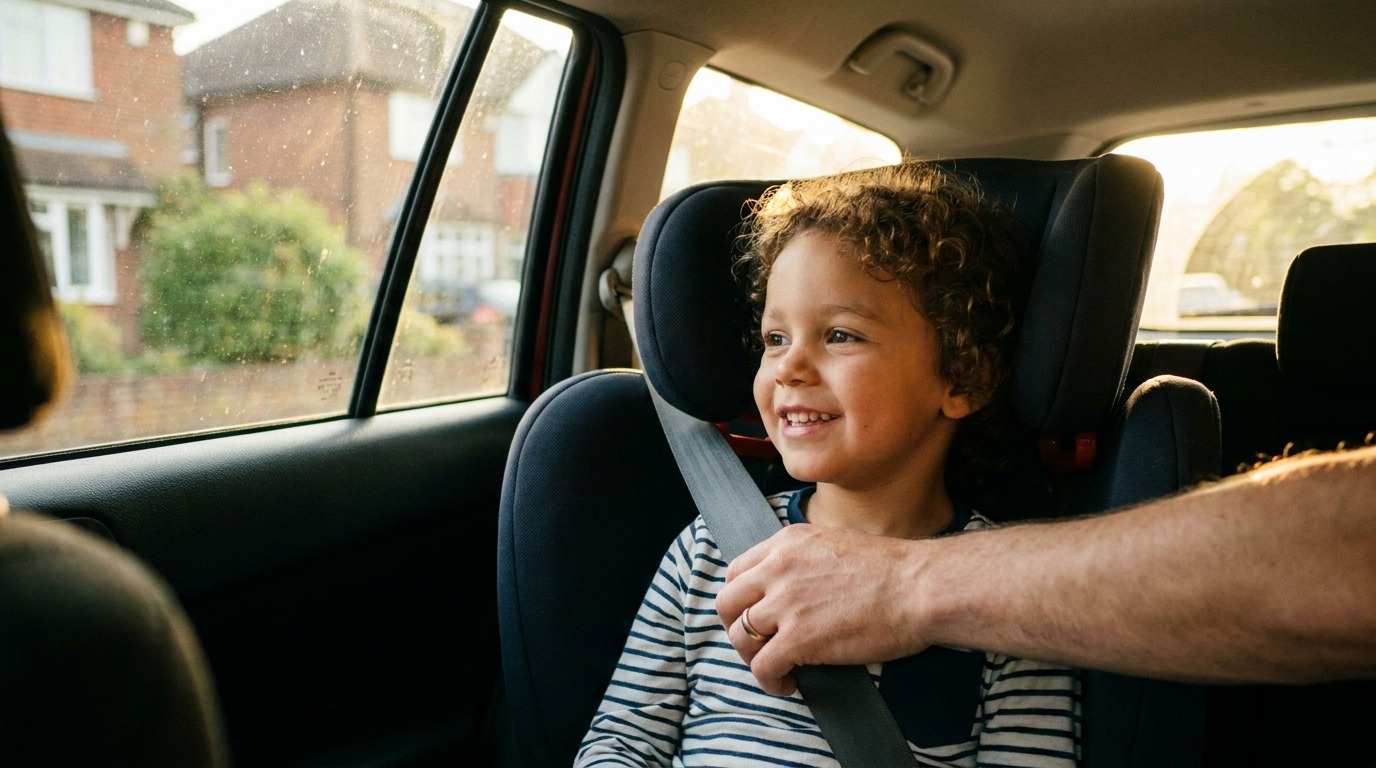
A booster seat is the stage after a harnessed toddler car seat but before a child is big enough to use the adult seatbelt on its own. Its job is simple but vital: it lifts your child up so the car’s lap and diagonal belt sits correctly across the strong parts of their body, rather than across the soft tummy and neck.
In the UK, children must normally use a child car seat until they are either 135cm tall or 12 years old, whichever comes first. Most children move from a 5-point harness seat into a booster somewhere between roughly 100cm and 125cm in height, but you should always be guided by the specific seat’s height or weight limits rather than your child’s birthday. For the full legal detail, see the GOV.UK rules on booster seats.
The signs your child has outgrown their harnessed seat
- Their shoulders are above the highest harness slots, or the harness no longer sits at or just above shoulder height.
- They have reached the maximum weight or height stated on their current seat.
- The tops of their ears are level with the top of the seat’s headrest.
- They can reliably sit properly for the whole journey without slumping or wriggling out of position.
That last point is easy to overlook. A booster relies on the adult seatbelt to restrain your child, so they need to be mature enough to stay seated correctly. If your three-year-old technically meets a weight limit but can’t sit still, they are usually safer in a harnessed seat for longer.
What the UK law says (and what “approved” means)
Booster seats sold in the UK must be approved to one of two safety standards: the older ECE R44/04 (weight-based) or the newer R129, often called i-Size (height-based). You’ll see both on the market, and both are legal. Always check that any seat carries one of these approval labels.
Importantly, the rules around backless boosters changed a few years ago: newer backless booster cushions are only approved for children over 125cm tall and more than 22kg. High-back boosters remain suitable for smaller children. The detail and current thresholds are set out in the GOV.UK rules on booster seats, so do check there before you buy, as legal requirements can be updated.
High-back vs backless boosters
This is the decision most parents wrestle with. Both raise your child up, but they do very different jobs beyond that.
High-back boosters
A high-back booster guides the diagonal belt across the shoulder, provides head and torso support, and offers meaningful side-impact protection around the head and chest. For these reasons, road-safety organisations generally recommend keeping children in a high-back booster for as long as possible. The Maxi Cosi RodiSport Booster Car Seat is a good example of a lightweight, breathable high-back booster designed for everyday family use, while the CYBEX Solution Z-Fix Booster Car Seat adds a reclining headrest and a height-adjustable, linear side-impact system for older children. The premium Clek Oobr High Back Booster Seat is built with a rigid frame and a reclining base, and is popular with parents wanting a long-lasting, substantial seat.
Backless boosters
A backless booster is essentially a sturdy cushion that raises your child so the lap belt sits low across the hips. It offers no side or head protection, so it suits older, taller children only, and is best thought of as a convenient second seat for occasional journeys, lift-shares or grandparents’ cars. The Britax UpNGo Click Backless Booster Car Seat is light, easy to move between vehicles and connects to ISOFIX points to stop it sliding when empty.
2-in-1 and growing options
If you’d rather not buy twice, a seat that starts as a high-back booster and converts to a backless cushion later can be excellent value. The Joie Basil 2-in-1 Belt-Positioning Booster does exactly this, growing with your child across the booster years.
Comparing our featured boosters
| Booster | Type | Best for | Price |
|---|---|---|---|
| Britax UpNGo Click | Backless | Older, taller children & second cars | £70 |
| Joie Basil 2-in-1 | High-back to backless | Value across the whole booster stage | £100 |
| PEG Viaggio Shuttle 120 | High-back | Comfort-focused everyday use | £130 |
| Maxi Cosi RodiSport | High-back | Lightweight, breathable daily seat | £200 |
| CYBEX Solution Z-Fix | High-back | Side-impact protection & recline | £300 |
| Clek Oobr | High-back | Premium, durable, long-term use | £370 |
If your child is on the cusp of needing a high-back booster but you want plenty of growing room and a softer ride, the PEG Viaggio Shuttle 120 is worth a look for its generously padded, adjustable design.
Features that genuinely matter
- Belt guides: Clear, well-placed guides keep the diagonal belt on the shoulder and the lap belt low on the hips, where it should be.
- ISOFIX connectors: On a booster these don’t restrain your child (the adult belt does), but they stop the seat sliding around and becoming a projectile when empty.
- Adjustable headrest: Should rise as your child grows so the belt always exits at shoulder height.
- Side-impact protection: Particularly valuable on high-back models for shielding the head and chest.
- Breathable, removable covers: Long journeys are warmer than you think, and machine-washable covers are a sanity-saver.
A quick rule of thumb: keep your child in a high-back booster for as long as they fit it. Moving to a backless cushion too early trades away head and side protection for very little gain.
Fitting your booster correctly
- Position the seat firmly against the vehicle seat back, engaging ISOFIX connectors if fitted.
- Sit your child fully back, bottom and back against the seat.
- Thread the diagonal belt through the shoulder guide so it crosses mid-shoulder, never the neck.
- Check the lap belt sits low and flat across the hips and upper thighs, not the tummy.
- Remove bulky coats first; a thick coat under the belt leaves it dangerously loose.
Re-check the headrest height every few months. Children grow in spurts, and a guide that was perfect in spring may sit too low by autumn.
Further reading
Sorting the car is only part of preparing for family life. If you’re still setting up at home, these guides may help: Crib vs Bassinet vs Moses Basket: Newborn Sleep Choices, Safe Sleep for Babies: How to Set Up the Nursery, and our How to Build the Perfect Nursery: Furniture Checklist.
The bottom line
Your child is ready for a booster when they have genuinely outgrown their harnessed seat by height or weight, and they’re mature enough to sit properly for the whole journey. Choose a high-back booster wherever you can, keep them in it as long as it fits, and only consider a backless cushion once they’re well over 125cm and 22kg. When in doubt, follow the seat’s own limits and the current GOV.UK guidance.
Ready to find the right fit for your child? Browse our full range of booster seats at Millington Baby, with free UK delivery and free 30-day returns on every order.
Frequently Asked Questions
At what age does my child need a booster seat in the UK?
Age is a weak guide on its own. Most children move into a booster between roughly 100cm and 125cm in height, but you should follow your seat's stated height or weight limits. Children must use an approved child seat until they reach 135cm or turn 12, whichever comes first.
Is a high-back or backless booster better?
A high-back booster is safer for most children because it provides head and side-impact protection and guides the diagonal belt across the shoulder. Backless cushions offer no side protection and suit only older, taller children, typically over 125cm and 22kg.
When can my child stop using a booster seat altogether?
In the UK a child can travel without a car seat once they reach 135cm tall or turn 12. Even then, many children benefit from a booster a little longer until the adult belt fits them correctly across the shoulder and hips.
Do booster seats need ISOFIX?
Not for restraint, as the adult seatbelt holds your child in a booster. However, ISOFIX connectors keep the seat stable and stop it moving around when empty, so they are a useful, convenient feature.
Can my child wear a coat in a booster seat?
Remove bulky or padded coats before buckling up. A thick coat compresses in a crash and leaves the belt too loose. Use a blanket over the belt or a thin layer instead to keep your child warm and safely restrained.